
HPS Lighting
Faq
1. Why is HPS lightning still popular in the UK despite the LED advances?
HPS are high-pressure sodium lights, and they remain a standard in many UK commercial greenhouses. This is because it offers high intensity, is effective for year-round farming and provides an additional radiant heat during the cold season, which is not possible through LED lights.
2. What is the difference between single-ended and double-ended HPS lamps?
The major differences between them are that double-ended HPS lamps are 25 to 30 per cent more efficient, brighter and last longer than single-ended lamps. This is because double-ended lamps are supported at both ends, which allows uniform heating and more stable output, making it ideal for maximising heavy fruiting crop yields. For the best quality, you can buy double-ended HPS lamps from a reputable company in the UK.
3. Do I need a special ballast for HPS Lights?
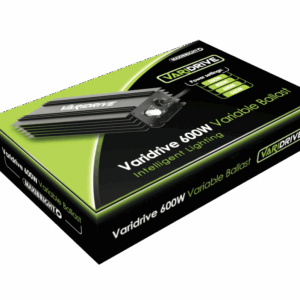
Yes, HPS lights require a specific ballast specifically designed for high-intensity discharge lighting to regulate voltage and current. You cannot use unregulated household power, as the ballast acts as an engine of a lightning system. To prevent any damage, the ballast must perfectly match the HPS bulb’s wattage.
4. Which plant stage is best for HPS lights?
HPS lights are superior for the fruiting and flowering stages due to their orange spectral output. This warm light encourages bud development and heavy yields.
5. Can I use HPS lights for vegetative growth?
Yes, but they may cause plants to stretch compared to blue-spectrum lamps or LEDs. The lack of blue light makes them less ideal for vegetative growth.
6. How far should I hang HPS lights from my plant?
The most optimal distance is 30 to 60 centimetres for a six-hundred-watt light, but it depends on the wheat output. You can check it by performing a simple test by placing your hand at that distance from the light; if it is comfortable on the back of your hand, it’s a safe distance.
7. How often should I change my HPS bulbs?
These bulbs last over twenty thousand hours, but they might lose their intensity over time. If you are a serious grower, you should replace HPS lamps for horticulture in the UK after every six thousand to ten thousand hours to maintain optimum yields throughout the year.
8. How do I know if my HPS bulb is completely used up?
An exhausted high-pressure sodium bulb typically repeats a cycle at the end of its life that is turning on, running for a while, turning off and then restarting after cooling down. The other signs for this include a blackened end of the lamp or a clearly visible reduction in brightness and spectral quality.
9. Are HPS lights expensive to run in the UK?
Yes, high-sodium lights are expensive to run in the UK as compared to LED lights. Roughly, a 600W system will cost 65 to 71 pounds per month in electricity due to high power draw and heat generation. Even though it will result in significant electricity costs, it may reduce the need for separate greenhouse heating.
10. Can I use HPS in a small, enclosed space?
Yes, you can use HPS lights in small and enclosed spaces, but it is generally not recommended without proper investment in cooling and ventilation to manage the heat generated by HPS. For small spaces, LED grow lights are a better option. If you choose to proceed with HPS light, go for a 150W to 250W model rather than higher wattages, and do not forget to maintain the proper ventilation. These models are easily available at a reputable horticulture centre in the UK.
11.Can I run HPS Lights at 240V?
Yes, most commercial HPS systems in the UK are 240V compliant. This is recommended to reduce amperage draw and run cooler compared to lower voltage options.
12. How many hours a day should I light my HPS lights?
HPS lights are usually run for 12 to 18 hours a day, depending on the plant growth stage. For the flowering or fruiting plants, it is recommended to turn on for 12 hours and turn off for another 12 hours. Additionally, the vegetative growth requires 16 to 18 hours of light daily to maximise yield.


